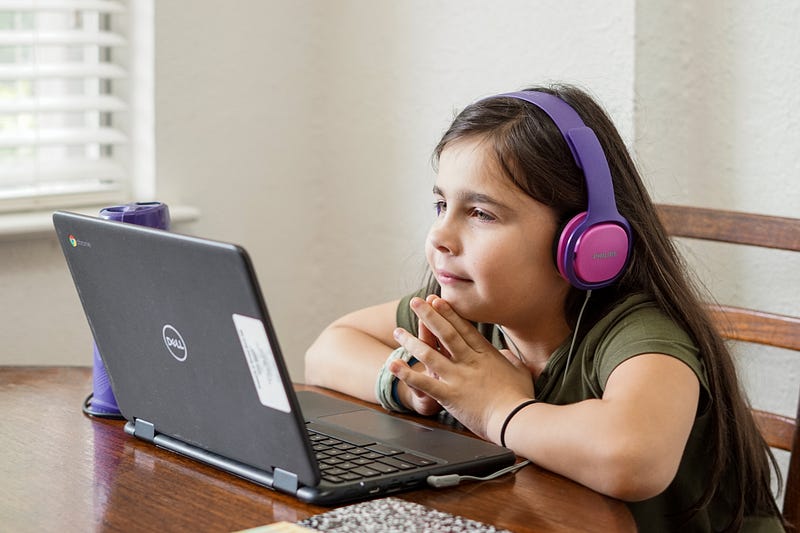
Enhance Your Curriculum with AI: An All-in-One Lesson for Any Class
Unleash the power of AI and embrace the future of education.
Tired of spending hours on end making assignments and writing tests? Teachers are no strangers to the struggle of creating curriculum while managing a packed schedule. Meanwhile, students grapple with difficult concepts while balancing heavy workloads.
To help teachers and students thrive in today’s fast-paced classroom, we have devised the ultimate AI lesson plan! Regardless of grade, subject, and technical knowledge, our custom templates and hands-on worksheets can:
Save hours for teachers by automating curriculum creation
Equip students with the skills to tackle their courses with confidence
Our lesson will turn students into AI experts as they learn how to:
Communicate clearly
Refine AI-generated text
Structure an effective AI prompt
Create useful prompts for school
We even have templates for teachers! Save hours a day by simply filling in the blanks and pasting the text into ChatGPT.
Tailored for Every Class
We offer various flexible lesson plans ranging from 90 to 270 minutes, allowing teachers to effortlessly choose the right lesson for their curriculum’s needs.
The beauty of this lesson lies in its universality. It’s designed to work across subjects, helping students and teachers engage with AI in education without requiring advanced technical knowledge.
Whether learning English, math, or science, students are provided with a foundational understanding of how to interact with AI tools, giving them the skills to become critical thinkers and problem-solvers in our increasingly AI-driven world.
Dive into our AI prompting lesson by clicking on our Google Drive folder and navigating to the “AI Prompting Lesson Guide”. Pick a lesson plan that works best for you, and discover how teaching and learning with AI can be simpler, smarter, and more impactful than ever before.
Looking for practical tools to complement our AI lesson? Check out our blog on the top AI tools for educators! Discover how artificial intelligence in education can streamline tasks, from lesson planning to personalized student support. Unlock new possibilities with these tools and experience the full AI benefits in your classroom.
Thriving in Tomorrow’s Classroom: Top 3 Trends in STEAM Education for 2024
Welcome to 2024, where, despite the absence of a human colony on the Moon (come on NASA!) – we are undeniably living through the future of education with even more emphasis on STEAM education.
STEAM (Science, technology, engineering, arts, and mathematics) will continue its momentum as an important pillar of K-12 school curriculums around the world to better prepare students for the complexities of the modern world. However, this journey can be both thrilling and perplexing for parents.
This blog is your dedicated guide to the latest trends in STEAM education, personalized for parents seeking to empower their children on the path to academic success and future opportunities in 2024 and beyond!
What is STEAM?
STEAM stands for Science, Technology, Engineering, Arts, and Mathematics. It is a merger of subjects with the goal of developing technical and critical thinking skills for modern learners.
STEAM education has been – and will continue to be – a hot topic worldwide. Governments worldwide are continuously looking for ways to help students build the solid foundation they need for the future.
STEAM education is important for students as it provides a range of skills and competencies that could easily be adapted across disciplines.
Some of the key reasons for STEAM education include:
STEAM education encourages innovation and creativity.
STEAM education helps to develop science literacy.
There are many transferable skills that students could learn from STEAM education including problem solving, critical thinking, team work, and communication.
During the last couple of years, digital classrooms have taken off as essential tools in education. The integration of digital tools and online platforms with in person teaching has become instrumental in providing dynamic and accessible educational experiences for students. As a parent, there will be tricky parts as you help your children adapt to the new environment. Let’s delve into the increasing role of digital tools, share tips for success,, and highlight the significance of cultivating digital literacy skills in the modern educational landscape.
Artificial Intelligence and STEAM Education
Artificial Intelligence (AI) has undeniably taken the world by storm in the past year. We ran a simple comparison of Google trends on the worldwide interests for STEM education vs. AI education and AI has overtaken STEM education. AI will continue to be a trend for education in 2024 and beyond.
AI has existed for a while but has only become more relevant to the general public with the launch of ChatGPT. Despite some of the debate about AI’s role in education, we believe that it’s an important tool that could help with students’ learning.
We envision a future where teachers and students will be able to embrace AI to supplement education. ChatGPT is a great tool that will be able to elevate the STEM learning experience of students as long as it’s used properly.
VR & AR for STEAM education
Technological advancement will continue to push immersive learning as a trend for 2024. Immersive learning involves using technologies such as virtual reality (VR) and augmented reality (AR) to create engaging and interactive educational experiences.
Side note – have you seen the latest Apple Vision Pro? We can’t wait to see how this could be applied for education.
Immersive learning can transform the way students learn STEAM. VR and AR will be able to let students experience scenarios and apply their knowledge in simulations that would otherwise be impossible in real life. Additionally, it makes learning more interactive and engaging. Students will be able to visualize complex data and tools better with the help of VR and AR tools.
This is a trend that we are the most excited about and we would love to see more opportunities of applying it in STEAM education.
Continuous push for STEAM education in the curriculum
Back in 2022, the Government of Ontario revamped high school courses in science, technology, engineering, mathematics (STEM), to ensure students are better prepared for the workforce of tomorrow. Updates to 2024 include “a new Technological Education curriculum, beginning with revised Grade 9 and Grade 10 courses” happening in September.
Similarly, many other governments around the world are continuing to push for emphasis on STEAM education.
Hear from Wiz
Our team at Wiz Robotics are very excited about these exciting trends happening in the STEAM education space and we can’t wait to share learnings and resources with our students and parents.
STEAM education is important and governments are taking action. The rising trend of mandatory technology courses across various school boards underscores the necessity for students to become more technically proficient. Many parents think that this just means giving students technology – but that isn’t really it. It is teaching students to be software adaptable, being proficient at coding, and learn general math skills and such.
– JF, Wiz Robotics
Tips for success
Navigating digital classrooms can be challenging for parents and students alike but can also be a rewarding experience.
Here are some tips for success:
Familiarize yourself with the digital tools and platforms so you can help your children on this journey
Digital literacy goes beyond learning about making decisions based on facts and research. It’s a good opportunity to educate your children on online safety, privacy, and instill good habits regarding online behaviour.
Promote self-advocacy with your children as digital classrooms and tools pose a different dynamic as in-person learning. Encourage them to ask questions, seek clarification, and communicate with teachers when needed.
Be patient with both yourself and your children as navigating new tools will be a learning process for both of you.
Still confused about what to do next?
At Wiz Robotics, we have exciting STEM learning programs to help you get started with STEM education. Our programs offer exciting and engaging hands-on opportunities for students to be equipped with the knowledge they need to succeed.
Quest for Code 2024: Navigating the Top 5 Programming Languages for Middle and High School Students
The world of STEM is constantly changing and evolving. Whether your child is taking their first steps into the world of programming, contemplating where to begin, or already a seasoned coder, our 2024 Quest for Code guide will help you navigate through it all.
These top 5 programming languages are not just used in the real world, they also serve as foundational blocks for every enthusiastic STEM student. Let’s embark on this adventure together to demystify the coding realm for students of all levels!
Table of Contents
Scratch
Scratch is a visual programming language designed specifically for children as an educational tool. Its high-level block-based visual programming language allows children create their own digital stories, games, and animations.
Scratch promotes computational thinking and problem solving skills, creative teaching and learning, self-expression and collaboration, and equity in computing – all extremely important skills of STEM that children can apply in real world situations!
Scratch is essential for beginners as it is highly visual and easy to learn. It provides a good introduction to coding and computer science fundamentals. The target age group for Scratch is 8-16 years old. However, this shouldn’t deter you from introducing programming to younger children! ScratchJr was developed for children aged 5-7. It enables children to create their own interactive stories and games by snapping together visual programming blocks.
Before you jump to conclusions, it’s also important to acknowledge some of the shortfalls of Scratch. While it’s a useful tool to introduce children to programming, it doesn’t provide progression to text-based programming. Additionally, there are also no advanced programming features that might become crucial as your children become more knowledgeable and comfortable with programming.
Python
Python is a high-level, general-purpose programming language that is widely regarded as an excellent language to begin with. It has a clear and readable syntax, making it easy for students to grasp programming concepts. Python is versatile and used in various fields including web development, data science, software development, and even artificial intelligence. It’s a great language for children to learn and start developing their own websites and games!
Python remains one of the most popular programming languages out there in the world with a large active community. This is a great advantage because having an active community means having a great resource for helping to solve issues! You won’t need to worry if your child encounters a coding problem because most likely there is somebody out there who has encountered it as well.
Bonus Tip:
Did you know that you could build your own bots with Python for Discord? The creativity is limitless with bots on Discord. Discord users often create these bots to enhance user experience and functionality. This is a fun way to get students excited about learning Python and applying it in a real world scenario.
There are many good things about Python but we should also take note of some of the shortcomings of this language. Python uses simple language which can also become a drawback for someone who becomes accustomed to it as it would be harder to learn a new language. This leads to the other complication that large enterprises don’t really use it as it’s not the most secure and is often difficult to integrate with complex layers of databases.
Ruby
Ruby is a dynamic, open source programming language with a focus on simplicity and productivity. It is similar to Python in the sense that it’s easy to read and write. People mainly use it to build web applications, building servers and data processing, web scraping, and crawling.
Ruby is less common than the other languages mentioned in the post. However, according to Pluralsight, an online education company, Ruby definitely has the edge over Python when it comes to web development.
The downside to this is that Ruby’s community is small and primarily only focuses on web development.
Java
Java is another versatile and widely-used programming language that allows developers to create software applications for a variety of devices and platforms. It’s especially popular for web development and mobile app development, particularly for Android devices.
Java helps to build a solid foundation for children because it introduces key programming concepts such as object-oriented programming, variables, and loops. These are important foundational concepts for understanding complex languages and programming concepts. This would be especially helpful if your child is interested in pursuing a career in computer science as it serves as a stepping stone for more complex programming languages.
Bonus Tip:
Java is used for University of Waterloo’s Canadian Coding Competition (CCC) along with C, C++, Python 2, and Python 3 as the recommended languages. Learn more about the CCC and how Wiz Robotics can help here.
The downside of Java is that it can get fairly verbose – this means that it may take more lines of code to achieve certain tasks. Although it’s designed to be user-friendly, there’s still a bit of a learning curve for beginners.
C++
C++ first appeared 38 years ago. Despite its relatively “old” age, it’s still a very relevant programming language to learn in 2024. C++ is a general-purpose programming language that is widely used in various industries, including game development, system programming, and embedded systems.
Bonus Tip:
C++ is used a lot in Arduino. This would give students who are especially interested in hardware engineering a head start as they would have gotten a lot of practice already using the language.
As a beginner, C++ might not be the easiest programming language to learn. However, it’s very rewarding once you are able to grasp it. C++ helps to build a solid foundation in programming with a structured approach to learning.
Bonus: Roblox for Games development
Tired of reading about programming languages? Let’s talk about something more fun! Did you know that games can also be a tool for learning programming?
Roblox Studio is an advanced game development program, exclusive to Windows and macOS. This is a great tool to use if your child has a special interest in games development. Its powerful and user-friendly tool enables users, particularly game developers, to build their own virtual worlds and games within the Roblox ecosystem.
Roblox Studio has many features including using Lua programming language for scripting. The powerful script engine lets developers control game mechanics, create interactions, and customize the behaviour of in-game objects. It’s accessible for both beginners and advanced developers.
Summary
If you have made it this far down the blog – congratulations! Now you have a general knowledge of some of the most popular programming languages for students out there.
We have compiled a summary chart of each of these programming languages and notes about them to help guide you through the differences.
Wiz Robotics is no stranger to teaching any of these programming languages to our students. Whether your child is just starting out and trying to explore the different programming languages out there or if they are looking to advance their skills, there is something for everyone here at Wiz.
To learn more about how your child can get started on STEM, visit www.wizrobotics.com
Discover how ChatGPT is revolutionizing the way we learn STEM subjects.
Unless you have been living under a rock for the past few months, there’s a very high chance that you have heard of ChatGPT in some shape or form.
ChatGPT is taking the world by storm and has been widely discussed about across multiple industries and disciplines. The world of STEM education is no exception. As STEM educators, we are ecstatic about being able to utilize artificial intelligence to help students succeed in STEM. Contrary to some opposing voices on this subject, we believe it’s a great tool to assist in teaching and sparking curiosities in young minds.
Say goodbye to traditional, boring STEM lessons, and hello to ChatGPT’s engaging approach to education.
To put it simply, ChatGPT is a chatbot. It’s an advanced language model developed by an American artificial intelligence research laboratory, OpenAI. It is a type of artificial intelligence (AI) that is trained on large amounts of text data to generate human-like responses to questions and prompts.
ChatGPT uses a deep learning technique called Transformer, which allows it to understand the context of a conversation and respond in a meaningful way. The model has been trained on a massive dataset that includes a wide range of topics and styles, enabling it to generate text that is both informative and conversational.
The winning point about ChatGPT in our opinion is definitely its ability to respond in natural human-like conversations. This is especially helpful in education because it helps to summarize and generate information for various topics in a very informative, conversational, and easy-to-understand way.
To put it simply, think “Google” but with summarized information.
Sounds pretty amazing, right?
How will ChatGPT impact STEM education?
With the rising popularity of ChatGPT, many schools and educators are raising concerns over plagiarism and cheating on homework. Some schools are even going as far as banning it altogether. However, there are far more benefits of using ChatGPT as a companion tool to education than the risks it might bring.
First of all, ChatGPT encourages curiosity. Students can ask questions and receive engaging information on various topics that will help to spark interests. It’s also a great tool to provide personalized learning because it can engage in conversation with students and provide personalized responses based on their questions. This will allow students opportunities to interact with various topics they are interested in and be able to explore the subject further in a personalized experience.
Secondly, ChatGPT is an amazing advancement in technology because it greatly improves the accessibility of information. It’s easy to simply Google on a certain subject but it’s hard to be able to compile all the information out there. ChatGPT has the ability to make this information easier for students to access and learn.
Lastly, combining all the benefits of ChatGPT mentioned previously, we see ChatGPT as an amazing tool to supplement STEM learning. It can help students reinforce concepts learned in class and further encourage their curiosity.
ChatGPT sounds amazing! Are there any limitations?
As with all types of learning tools, ChatGPT is a tool that will greatly benefit students when it’s being used properly.
The most important thing to remember is that ChatGPT should not replace traditional methods of teaching. While it can provide access to information and respond in a human-like way, it will not be able to help students develop important skills such as critical thinking and problem solving skills. Those skills are some of the most important skills that comes with STEM learning and are developed through human interaction and direct instruction.
Rather than trying to ban or go against a new piece of technology, we should switch our mindset to thinking about ways in which we can take advantage of its capabilities to gain new grounds.
(Also, for the teachers and schools who are thinking of banning ChatGPT — the quick answer is no — you cannot ban it because you cannot control students’ access to their own networks.)
We envision a future where teachers and students will be able to embrace AI to supplement education. ChatGPT is a great tool that will be able to elevate STEM learning experience of students as long as it’s used properly. Human instruction in conjunction with machine learning will help students achieve a new state of high-quality STEM education.
Neil Armstrong became the first human to set foot on the lunar surface followed by Buzz Aldrin while their fellow crew Michael Collins stayed in orbit around the moon. 21 hours and 36 minutes later, Armstrong and Aldrin lifted off to join Collins at the Columbia Command Module in the lunar orbit.
Fast forward to more than 50 years later, NASA is returning humans to the moon with the Artemis program.
We’re going back to the Moon for scientific discovery, economic benefits, and inspiration for a new generation of explorers: the Artemis Generation.
With the Artemis program, NASA will land the first woman and first person of color on the Moon with the goal of exploring more of the lunar surface than ever before. Ultimately, learnings from the moon missions will lead to the next giant leap of bringing the first astronauts to Mars.
According to NASA, the Artemis mission will build a community on the Moon, driving a new lunar economy and inspiring a new generation.
Sounds too far into the future? Well — work has already started!
Starting in 2022 and throughout the decade, NASA will send a suite of science instruments and technology demonstrations to the lunar surface. The one that we are the most excited about (so far) has got to be the VIPER.
What is the VIPER?
One of the most critical components of the Artemis program is the discovery of resources on the lunar surface in order to sustain human living on the moon. VIPER does exactly that.
VIPER stands for “Volatiles Investigating Polar Exploration Rover”. It’s a robot robot designed to scout for frozen water and other resources on the moon.
VIPER represents the first resource mapping mission on another celestial body.
VIPER is scheduled to land on the south-pole of the Moon in late 2023. At the size of a golf-cart, the rover venture for at least 100 days into the most shadowed regions of the moon to study and map for water ice deposits.
We are hosting the 2022 edition of the Wiz Prodigy Online STEM Competition right now at Wiz Robotics. This year’s theme will be around the space rover.
Each individual or team registration will come with an at-home robotics kit accompanied by the Wiz online learning platform so you can learn to code and build your rover from scratch.
You can learn more about the 2022 Wiz Prodigy Online STEM Competition directly on the website. Be sure to also check out the amazing Cybertruck creations from the 2021 Wiz Prodigy Competition!
NASA achieved an amazing milestone with the James Webb Telescope on Jan. 24th. What does this mean?
One of the biggest headlines in STEM that happened during the past week has got to be the James Webb Telescope.
NASA announced on January 24th that the $10 billion observatory has finally reached its destination after travelling nearly 1.6 million km (1 million mi.) since its Christmas Day launch.
Why should you care about the James Webb Telescope?
The Webb will help us gaze deeper into the history never seen before! We are talking about the very first stars and galaxies from over 13.5 billion years ago.
The James Webb Telescope Explained
Here are some quick facts that you should know about the Webb Telescope:
At a cost of $10 billion, the Webb Telescope and its flight was the culmination of 25 years of research and development.
It is the largest, most powerful and complex telescope that NASA has ever launched into space.
Artist’s representation of what the unfurled James Webb Space Telescope would look like in space. — NASA
It weights 13,700 lbs — roughly the mass of a full-size school bus.
At 69.5 ft x 46.5 ft (21 m x 14m), the Webb Telescope is comparable to a tennis court.
The Webb Telescope is equipped with a revolutionary set of 18 hexagonal mirror segments. This honeycomb arrangement allows for it to have the largest possible reflective surface area to make observations with the least amount of gap. Read more about the mirrors here and here.
The Webb Telescope is so sensitive that it could theoretically detect the heat signature of a bumblebee at the distance of the moon.
An international team of scientists, engineers, and technicians from 14 countries spent 40 million total hours building the Webb Telescope.
Fun facts
The James Webb Telescope is supposed to be in service for the next 20 years. Have you wondered how it can stay in deep space for so long?
The telescope was launched with a full tank of maneuvering fuel, enough for it to operate for at least 10 years — not bad, but not nearly as long as the 32 years and counting that the Hubble Space Telescope has been in service in a stable low-Earth orbit, where it needs no such fuel.
So… How is the Webb going to stay in service?
Of course the engineers had already considered this aspect. They had built the Webb with a special refill port that would allow for a spacecraft to come in and fuel the tank.
The catch is — this type of spacecraft doesn’t exist yet and NASA only has a decade to make it happen.
But no need to worry!
The European Space Agency Ariane 5 rocket that launched the Webb placed it on a trajectory so true that the telescope had to use virtually none of its precious fuel on outward-bound course corrections, extending its operational life to what engineers now predict could be 20 years or more.
So there we go! Problem solved.
The first images from the Webb Telescope is expected to come in 6 months or earlier. We can’t wait to see how they look like!
Each individual or team registration will come with an at-home robotics kit accompanied by the Wiz online learning platform so you can learn to code and build your own robotics space rover.
You can learn more about the 2022 Wiz Prodigy Online STEM Competition directly on the website. Be sure to also check out the amazing Cybertruck creations from the 2021 Wiz Prodigy Competition!