Categories
AI Stem Education

Top 3 Trends in STEAM Education for 2024

Thriving in Tomorrow’s Classroom: Top 3 Trends in STEAM Education for 2024

Welcome to 2024, where, despite the absence of a human colony on the Moon (come on NASA!) – we are undeniably living through the future of education with even more emphasis on STEAM education. 

STEAM (Science, technology, engineering, arts, and mathematics) will continue its momentum as an important pillar of K-12 school curriculums around the world to better prepare students for the complexities of the modern world. However, this journey can be both thrilling and perplexing for parents. 

This blog is your dedicated guide to the latest trends in STEAM education, personalized for parents seeking to empower their children on the path to academic success and future opportunities in 2024 and beyond! 

Wiz Robotics staff picking up robotics pieces

What is STEAM?

STEAM stands for Science, Technology, Engineering, Arts, and Mathematics. It is a merger of subjects with the goal of developing technical and critical thinking skills for modern learners. 

STEAM education has been – and will continue to be – a hot topic worldwide. Governments worldwide are continuously looking for ways to help students build the solid foundation they need for the future. 

Read more about this on our blog STEM in the Curriculum: 5 reasons why it’s important. 

Why is STEAM important 

STEAM education is important for students as it provides a range of skills and competencies that could easily be adapted across disciplines.

Some of the key reasons for STEAM education include: 

  • STEAM education encourages innovation and creativity. 
  • STEAM education helps to develop science literacy. 
  • There are many transferable skills that students could learn from STEAM education including problem solving, critical thinking, team work, and communication. 

Read more about skills in our blog articles: 

Navigating the digital classrooms

During the last couple of years, digital classrooms have taken off as essential tools in education. The integration of digital tools and online platforms with in person teaching has become instrumental in providing dynamic and accessible educational experiences for students. As a parent, there will be tricky parts as you help your children adapt to the new environment. Let’s delve into the increasing role of digital tools, share tips for success,, and highlight the significance of cultivating digital literacy skills in the modern educational landscape. 

Artificial Intelligence and STEAM Education

Artificial Intelligence (AI) has undeniably taken the world by storm in the past year. We ran a simple comparison of Google trends on the worldwide interests for STEM education vs. AI education and AI has overtaken STEM education. AI will continue to be a trend for education in 2024 and beyond.  

AI has existed for a while but has only become more relevant to the general public with the launch of ChatGPT. Despite some of the debate about AI’s role in education, we believe that it’s an important tool that could help with students’ learning. 

Read more about how AI can supplement education in our blog post. 

We envision a future where teachers and students will be able to embrace AI to supplement education. ChatGPT is a great tool that will be able to elevate the STEM learning experience of students as long as it’s used properly. 

VR & AR for STEAM education 

Technological advancement will continue to push immersive learning as a trend for 2024. Immersive learning involves using technologies such as virtual reality (VR) and augmented reality (AR) to create engaging and interactive educational experiences. 

Side note – have you seen the latest Apple Vision Pro? We can’t wait to see how this could be applied for education. 

Immersive learning can transform the way students learn STEAM. VR and AR will be able to let students experience scenarios and apply their knowledge in simulations that would otherwise be impossible in real life. Additionally, it makes learning more interactive and engaging. Students will be able to visualize complex data and tools better with the help of VR and AR tools. 

This is a trend that we are the most excited about and we would love to see more opportunities of applying it in STEAM education. 

Continuous push for STEAM education in the curriculum

Back in 2022, the Government of Ontario revamped high school courses in science, technology, engineering, mathematics (STEM), to ensure students are better prepared for the workforce of tomorrow. Updates to 2024 include “a new Technological Education curriculum, beginning with revised Grade 9 and Grade 10 courses” happening in September. 

Source: Ontario Modernizing Computer Studies and Tech-Ed Curriculum to Ensure Students Are Prepared for the Jobs of the Future

Similarly, many other governments around the world are continuing to push for emphasis on STEAM education.

Hear from Wiz

Our team at Wiz Robotics are very excited about these exciting trends happening in the STEAM education space and we can’t wait to share learnings and resources with our students and parents.

STEAM education is important and governments are taking action. The rising trend of mandatory technology courses across various school boards underscores the necessity for students to become more technically proficient. Many parents think that this just means giving students technology – but that isn’t really it. It is teaching students to be software adaptable, being proficient at coding, and learn general math skills and such.

– JF, Wiz Robotics

Tips for success

Navigating digital classrooms can be challenging for parents and students alike but can also be a rewarding experience.

Here are some tips for success:

  • Familiarize yourself with the digital tools and platforms so you can help your children on this journey
  • Digital literacy goes beyond learning about making decisions based on facts and research. It’s a good opportunity to educate your children on online safety, privacy, and instill good habits regarding online behaviour. 
  • Promote self-advocacy with your children as digital classrooms and tools pose a different dynamic as in-person learning. Encourage them to ask questions, seek clarification, and communicate with teachers when needed.
  • Be patient with both yourself and your children as navigating new tools will be a learning process for both of you. 

Still confused about what to do next? 

At Wiz Robotics, we have exciting STEM learning programs to help you get started with STEM education. Our programs offer exciting and engaging hands-on opportunities for students to be equipped with the knowledge they need to succeed.

Try a demo class and see for yourself!

Connect with us

Facebook / Instagram / Website

Categories
Coding Competition Education Resources Stem Education

Top 5 Programming Languages for Middle and High School Students

mother helping her daughter with her homework

Quest for Code 2024: Navigating the Top 5 Programming Languages for Middle and High School Students


The world of STEM is constantly changing and evolving. Whether your child is taking their first steps into the world of programming, contemplating where to begin, or already a seasoned coder, our 2024 Quest for Code guide will help you navigate through it all. 

These top 5 programming languages are not just used in the real world, they also serve as foundational blocks for every enthusiastic STEM student. Let’s embark on this adventure together to demystify the coding realm for students of all levels!

Table of Contents

Scratch

Scratch is a visual programming language designed specifically for children as an educational tool. Its high-level block-based visual programming language allows children create their own digital stories, games, and animations.

Scratch promotes computational thinking and problem solving skills, creative teaching and learning, self-expression and collaboration, and equity in computing – all extremely important skills of STEM that children can apply in real world situations!

MIT Media Lab, Developers of Scratch
Related reading

Scratch is essential for beginners as it is highly visual and easy to learn. It provides a good introduction to coding and computer science fundamentals. The target age group for Scratch is 8-16 years old. However, this shouldn’t deter you from introducing programming to younger children! ScratchJr was developed for children aged 5-7. It enables children to create their own interactive stories and games by snapping together visual programming blocks. 

Before you jump to conclusions, it’s also important to acknowledge some of the shortfalls of Scratch. While it’s a useful tool to introduce children to programming, it doesn’t provide progression to text-based programming. Additionally, there are also no advanced programming features that might become crucial as your children become more knowledgeable and comfortable with programming. 

Python

Python is a high-level, general-purpose programming language that is widely regarded as an excellent language to begin with. It has a clear and readable syntax, making it easy for students to grasp programming concepts. Python is versatile and used in various fields including web development, data science, software development, and even artificial intelligence. It’s a great language for children to learn and start developing their own websites and games!

Python remains one of the most popular programming languages out there in the world with a large active community. This is a great advantage because having an active community means having a great resource for helping to solve issues! You won’t need to worry if your child encounters a coding problem because most likely there is somebody out there who has encountered it as well. 

girl in pink t shirt looking at the imac

Bonus Tip:

Did you know that you could build your own bots with Python for Discord? The creativity is limitless with bots on Discord. Discord users often create these bots to enhance user experience and functionality. This is a fun way to get students excited about learning Python and applying it in a real world scenario.

There are many good things about Python but we should also take note of some of the shortcomings of this language. Python uses simple language which can also become a drawback for someone who becomes accustomed to it as it would be harder to learn a new language. This leads to the other complication that large enterprises don’t really use it as it’s not the most secure and is often difficult to integrate with complex layers of databases. 

Ruby

Ruby is a dynamic, open source programming language with a focus on simplicity and productivity. It is similar to Python in the sense that it’s easy to read and write. People mainly use it to build web applications, building servers and data processing, web scraping, and crawling. 

Ruby is less common than the other languages mentioned in the post. However, according to Pluralsight, an online education company, Ruby definitely has the edge over Python when it comes to web development. 

The downside to this is that Ruby’s community is small and primarily only focuses on web development.

Java

Java is another versatile and widely-used programming language that allows developers to create software applications for a variety of devices and platforms. It’s especially popular for web development and mobile app development, particularly for Android devices. 

Java helps to build a solid foundation for children because it introduces key programming concepts such as object-oriented programming, variables, and loops. These are important foundational concepts for understanding complex languages and programming concepts. This would be especially helpful if your child is interested in pursuing a career in computer science as it serves as a stepping stone for more complex programming languages.

Bonus Tip:

Java is used for University of Waterloo’s Canadian Coding Competition (CCC) along with C, C++, Python 2, and Python 3 as the recommended languages. Learn more about the CCC and how Wiz Robotics can help here

photo of woman and boy looking at imac

The downside of Java is that it can get fairly verbose – this means that it may take more lines of code to achieve certain tasks. Although it’s designed to be user-friendly, there’s still a bit of a learning curve for beginners.

C++

C++ first appeared 38 years ago. Despite its relatively “old” age, it’s still a very relevant programming language to learn in 2024. C++ is a general-purpose programming language that is widely used in various industries, including game development, system programming, and embedded systems. 

mother helping her daughter use a laptop

Bonus Tip:

C++ is used a lot in Arduino. This would give students who are especially interested in hardware engineering a head start as they would have gotten a lot of practice already using the language.

As a beginner, C++ might not be the easiest programming language to learn. However, it’s very rewarding once you are able to grasp it. C++ helps to build a solid foundation in programming with a structured approach to learning.

Bonus: Roblox for Games development 

Tired of reading about programming languages? Let’s talk about something more fun! Did you know that games can also be a tool for learning programming?

Roblox Studio is an advanced game development program, exclusive to Windows and macOS. This is a great tool to use if your child has a special interest in games development. Its powerful and user-friendly tool enables users, particularly game developers, to build their own virtual worlds and games within the Roblox ecosystem.

Roblox Studio has many features including using Lua programming language for scripting. The powerful script engine lets developers control game mechanics, create interactions, and customize the behaviour of in-game objects. It’s accessible for both beginners and advanced developers.


Summary

If you have made it this far down the blog – congratulations! Now you have a general knowledge of some of the most popular programming languages for students out there.

We have compiled a summary chart of each of these programming languages and notes about them to help guide you through the differences.


Wiz Robotics is no stranger to teaching any of these programming languages to our students. Whether your child is just starting out and trying to explore the different programming languages out there or if they are looking to advance their skills, there is something for everyone here at Wiz. 

To learn more about how your child can get started on STEM, visit www.wizrobotics.com 

Categories
Competition Education Resources Engineering Stem Education

Top 5 Unique STEAM Careers in 2024

A year ago, we wrote about 5 Unique Jobs in STEM You Didn’t Know Existed. Fast forward to 2023, we now have an updated list of super interesting careers that will make you excited about having a future in STEAM!


STEM is short for Science, Technology, Engineering and Math. If you mix in “Art”, it becomes STEAM.

In the past, STEM fields have suffered from stereotypes partly influenced by media portrayals. According to a study conducted in 2018, negative stereotypes surrounding STEM have actually deterred women from pursuing STEM and being motivated to pursue these fields.

Photo by Desola Lanre-Ologun on Unsplash

Our goal at Wiz Robotics is to inspire future engineers, entrepreneurs & innovators. It’s time to change the how STEM careers have been perceived and motivate the future generation to think differently about the vast number of possibilities that STEM could bring.

Having said that, we are very excited to share with you our updated list of Top 5 Cool STEAM Careers to Consider in 2023!


Pastry Chef

Have you wondered why chocolate needs to be tempered before reaching the most optimal state for eating and baking? Or why adding different ingredients can result in different cake textures?

It’s all science!

Baking is part science, part math, and part art. Pastry chef is the perfect demonstration of a STEAM career that combines STEM, creativity, and art. Getting the most optimal combination of texture, taste, and presentation is not as easy as it seems.

In order to become a pastry chef, you would need formal training through an accredited facility. Some hiring managers might even prefer a bachelor’s degree.

If you are as passionate about pastries (or eating them) as I am, this is a fun and unique career to consider!

Photo by Elevate on Unsplash

Game Physics Programmer

What if I told you that you CAN have fun by studying physics?

A Physics Programmer apply math and physics to the art of game design. They are the ones whose code could enable you to experience shockwaves of an explosion in the game or a car crashing through the waves as if you were physically there in the virtual world.

Physics programmers requires a high level knowledge of physics and programming. They also should have a sense of gameplay and know how to blend in realism in games with fun components.

Being a physics programmer will make your dream of playing games for work become a reality.

Photo by Sean Do on Unsplash

Underwater Archaeologist

What does Titanic, Treasure Island, and Life of Pi share in common? — Shipwrecks!

Underwater or Marine archaeology is a field of archaeology practiced underwater. According to the National Marine Protected Areas,

Underwater Archaeology is the systematic documentation and recovery of information from submerged artifacts and underwater sites for the interpretation of past human cultures. Artifacts and sites, the locations of past human activity, possess information about human behavior in both the nature of the objects and in their exact distribution on or under the seafloor.

In simple words — shipwrecks and lost treasures!

Underwater archaeologists will get to dive deep into the ocean to discover the secrets of the ocean depths and search for shipwrecks and lost civilizations.

There are only around 15 universities worldwide that offer a degree in marine or underwater archeology. Diving training is also a must. Most professionals have a master’s or doctorate in this field.

Photo by NOAA on Unsplash

Medical Illustrator

“I love science but I also love art. Is there a job where I can do both at the same time?” YES — Medical illustrator is the answer.

A medical illustrator combines their expert knowledge of health sciences and artistic ability to explain medical principles and theories to the public. Their work may appear in textbooks and scientific journals, including educational materials such as brochures or booklets, video tutorials, and in-person exhibitions.

There are no undergraduate programs in medical illustrations. Professional medical illustrators often earn a master’s degree in medical illustration from an accredited graduate institution. Admission requirements general involve a bachelor’s degree with a major in art and a minor in the biological sciences, or a major in science with a minor in art, is preferred. On top of that, a portfolio of artwork and a personal interview are generally required.

Photo by Robina Weermeijer on Unsplash

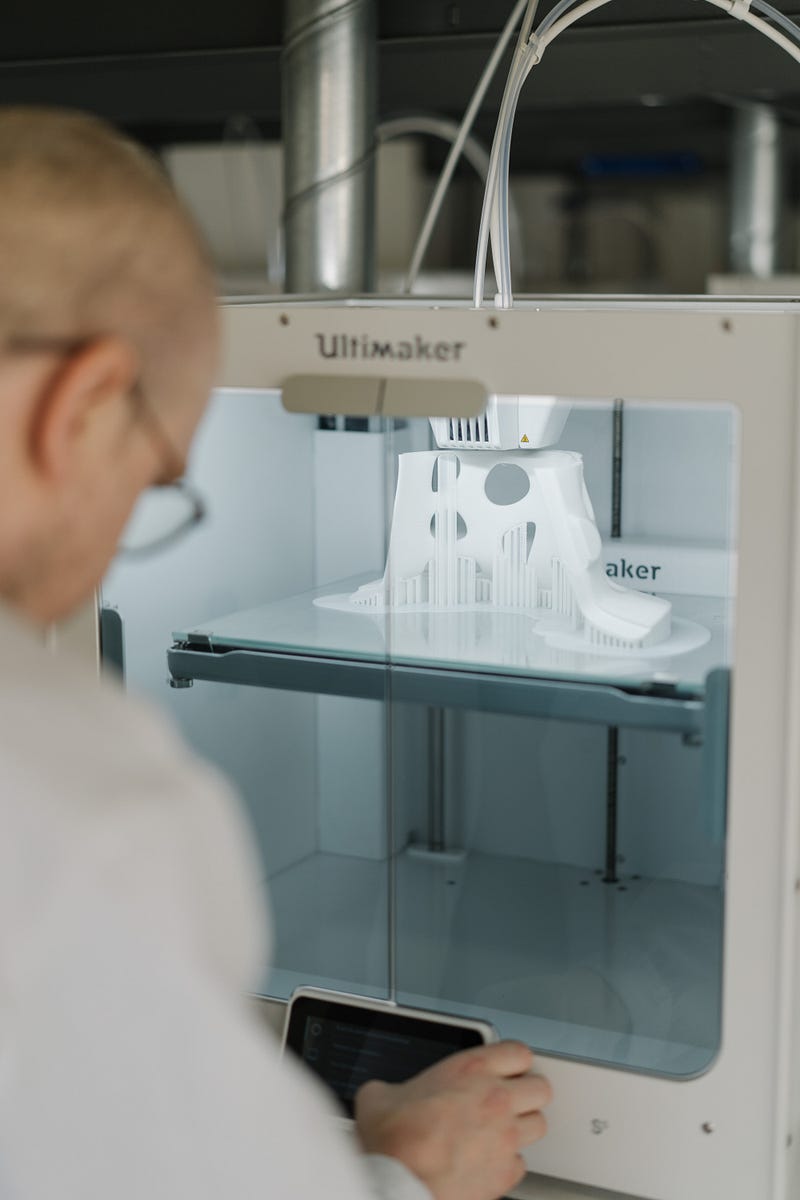
3D Printing Engineer

3D technology is becoming a game changer in making technological advances in the world. It’s also one of the rapidly emerging fields.

3D Printing allows engineers to create sometimes extremely complex prototypes efficiently. Being able to understand and know how to operate 3D printing is very valuable.

In order to become one, you typically need a degree in engineering. Some of the more relevant fields are: Materials & Chemical Science, Mechanical Engineering, Electronic Engineering/Mechatronics, and Civil Engineering. However if you are more interested in the design aspect of 3D printing, 3D Modelling/Industrial Design is the degree to go for.

Photo by Tom Claes on Unsplash

A career is STEM is not about doing “boring work in unpleasant settings”. It’s important to show students the diverseness of the industry to get them excited about a future of STEM.


Let us become your partner in STEM education!

At Wiz Robotics, our STEM classes offer exciting and engaging opportunities for students to practice problem solving.

Try a demo class and see for yourself!

Connect with us

Facebook / Instagram

Categories
Education Resources Stem Education

5 Surprising Ways to Incorporate STEM At Home

From the team at Wizrobotics… and updated for 2023!

With the new school year in full swing, we’ve compiled a few tips and tricks for you and your child to incorporate STEM into everyday activities.


STEM continues to be a hot topic in academic curriculums. At Wiz Robotics, we can’t stress enough the importance of STEM education for the younger generation (as you can see from our previous blog articles here and here).

With the new school year in full swing, there’s no reason to stop learning about STEM outside of the classroom. You might not have realized it already but STEM touches on almost every aspect of our lives! We’ve compiled a few tips for you and your child to incorporate STEM into everyday activities.

Photo by sofatutor on Unsplash

Here are the 5 ways to incorporate STEM everyday!

1. Build enthusiasm for STEM through Marvel superheroes.

YES you read that right! Marvel universe superheroes have a direct connection to STEM. From Ironman to the Hulk, the key component driving most of the heroes is a solid foundation in STEM.

When asked about the characters from Infinity War and the connection to STEM, the directors of Infinity War, Anthony and Joe Russo commented:

“Their fluency in science and technology is a big part of their super power, if not their entire super power in some cases,” Anthony says. “That’s a core part of their identity and who they are.”

Source: STEM saves the world

The next time you are watching the Marvel movies during family movie night, help build enthusiasm for STEM by talking about the super heroes and their super powers!

Photo by y.nasx on Unsplash

2. Incorporate STEM through household activities such as baking and cleaning

STEM is all around us even in activities such as baking and cleaning. If you love to bake with your children, this would be a great opportunity to get them practice addition and subtraction (as well as converting different measurement units)! Additionally, through observing the different reactions of ingredients being combined together in the process of baking, you can introduce the very interesting (and delicious) subject of food science.

Are you wondering what you can do with a background in food science? Read about being an Ice Cream Specialist in our previous article.

Cleaning is another day-to-day activity for your children to learn about STEM. You can introduce the various chemical reactions that would happen when certain cleaning products are applied to various stains and grease around the house.

Photo by Annie Spratt on Unsplash

3. Encourage curiosity and observation

Children are naturally curious about the world around them. Use this as an opportunity to teach them about STEM. If you don’t know the answer, build a framework with your children to encourage research and observation so you can find the answer together.

Observation is also an important process in science. Always support your children in observing the world and encourage them to share what they observe in their environment. For example, looking at the way that leaves change colour, new blooms taking place around the garden, and the change of seasons are all great starting points to introduce STEM.

Photo by Nong V on Unsplash

4. Talk about STEM’s role in addressing some of the biggest challenges facing our world

STEM plays an important role in helping to solve some of the world’s biggest challenges from pollution, to climate change, to food shortages.

For example, STEM in agriculture helps us generate more produce with less effort. This is especially important in areas facing food shortages due to environmental factors and lack of funds.

By introducing and discussing these issues with your children, it encourages them to think about STEM and get them excited about the ways that STEM can save the world.

Source: STEM Beyond the School: Its Role in Everyday Life

Photo by Elaine Casap on Unsplash

5. Get crafty and create STEM projects out of everyday objects

There are a lot of resources out there online that you can create with your children at home (and doesn’t involve spending a fortune on at-home robotics kits).

We’ve came across a few websites with lots of ideas and projects that you could build together with your children:

Photo by Sigmund on Unsplash

Do you have any tips and tricks that you would like to share?

Let us know!


Ready to take on the next level of STEM learning?

At Wiz Robotics, our STEM classes offer exciting and engaging opportunities for students to practice problem solving. Whether it’s virtual learning or in-class teaching, we will provide you with the support you need for your child’s STEM education.

Try a demo class and see for yourself!

Connect with us

Facebook / Instagram

Categories
Competition Education Resources

How can STEM Competitions Help Develop Problem Solving Skills?


Problem solving is one of the most important skills for children’s development. It’s also one of the most essential skills used in STEM education. In today’s blog, we explore this topic through the most recently concluded Wiz Prodigy Online STEM Competition.


If you have been following our 2022 Wiz Prodigy Online STEM Competition lately, you might have noticed that we have recently announced the top two submissions that caught our judges’ eyes!

Introducing…

Mary

Pictured above: Mary’s Wiz Prodigy Space Rover

… and Roneet!

Pictured above: Roneet’s Wiz Prodigy Space Rover

Head to our Instagram to view Mary and Roneet’s space rovers in action!

Our judges were impressed by all of the submissions. However Mary and Roneet’s space rovers stood out the most because they have demonstrated superb problem solving skills in tackling the challenges of the competition.


What are problem solving skills?

Problem solving skills are an essential aspect to children’s development.

Problem-solving also encourages creativity, which is key to success later on in life.

Source: Link

Not only will problem solving help children make better decisions, it’s also a key component in STEM. We can teach all types of concepts in classrooms but ultimately it’s up to our students to use their creativity to solve all types of complex problems.

Photo by Jonathan Kemper on Unsplash

How can STEM Competitions help?

STEM Competitions are a great way for students to combine the different concepts they have learned in order to solve complex challenges. During the Wiz Prodigy Competition, students not only had to learn the required knowledge, but they also had to think outside of the box to design and build their robotic space rovers to complete different challenges. It was an extremely valuable way for students to develop the problem solving skills that are critical to their future successes.

When we look deeper into the problem solving process, we can see that problem solving involves both creativity and critical thinking. Both of which were demonstrated through the top submissions of the Wiz Prodigy Competition.

Photo by Jeswin Thomas on Unsplash

Creativity in STEM

Creative thinking is the heart of problem solving. It is the ability to see a different way to do something, generate new ideas, and use materials in new ways.

Source: Link

Roneet’s clever use of the cardboard to better control the shape of the chassis of his space rover was very creative. The use of Artificial Intelligence (AI) to detect objects was also a nice surprise. This was a perfect demonstration of creativity in STEM as he had applied a concept that he had learned — AI, to solve the problem.

Pictured above: Roneet’s Wiz Prodigy Submission

Critical Thinking in STEM

Critical, or logical, thinking is the ability to break an idea into its parts and analyze them.

Source: Link

In Mary’s space rover, our judges loved the 3D printed pieces Mary had custom made in order to solve the challenges.

Pictured above: Mary’s Wiz Prodigy Submission

Mary also demonstrated to the judges on the reasoning behind her design as well as mentioning about an earlier design and its reasons on why it didn’t work. This was a great example of good design thinking and planning which was essential to the success of her space rover.


Going beyond STEM Competitions

At Wiz Robotics, our STEM classes offer exciting and engaging opportunities for students to practice problem solving.

Try a demo class and see for yourself!


Connect with us

Facebook / Instagram

Categories
Education Resources Stem Education

3 Tips to Study More Effectively According to Science

Science-backed methods to help students learn more effectively


In Ancient Rome, education was seen as very important and learning in public schools was heavily disciplined.

This was to encourage the belief that boys would learn more quickly and accurately if they were in constant fear of making mistakes.

Fortunately, such practices are no longer allowed (along with the rule that only boys could receive an education).

In modern society, there has been an increasing amount of evidence from researchers on several science-backed studying strategies that are proven to be effective.

Gone are the days of cramming and say hello to Spaced Repetition, Interleaving, and Hypercorrect methods.


Spaced Repetition

Spaced Repetition, also known as Distributed practice, is the strategy of studying material over a number of relatively short sessions.

According to a study done in 2013, researchers evaluated the 10 most commonly used learning techniques and found that the spaced repetition method was one of the most highly effective studying techniques.

Spacing out learning over time (i.e. 1–2 hours every other day, or a few times a week) was proven to be more effective in retaining more information and for longer.

According to another study from 2006 titled “Distributed practice in verbal recall tasks: A review and quantitative synthesis” published in Psychological Bulletin, the effect of spacing out learning sessions has been demonstrated in over 200 research studies from over a century of research.

In summary — Don’t cram.

Photo by JESHOOTS.COM on Unsplash

Interleave

How often have you heard of the phrase “Practice makes perfect”? We’ve always believed that the key to learning complex concepts is to learn it in blocks where you start with the basics and move on to the next step only when you’ve mastered the current skill. This blocking concept is dominant in schools, training programs, and other settings.

Interleaving is a learning method that’s been gaining popularity in the education world and is proven to be more effective than the traditional blocking method. It’s a technique of combining, mixing, or interleaving different concepts, subjects, or topics to study in one session.

Numerous studies across fields like mathematics (algebra and geometry), athletics (baseball and basketball), music, and medicine suggest that interleaving leads to key benefits for learners:

– Interleaving trains the brain to traverse between concepts by creating different practices rather than relying on rote response or muscle memory.

– Interleaving deepens long-term memory (brain and muscle) associations because mind and body are retrieving various responses.

– Interleaving requires students to discriminate among problem types and select a problem-solving strategy.

How can we use Interleave in practice?

To interleave while studying, students can choose several different topics and spread them throughout their study sessions. For example, studying biology and chemistry together can result in making new connections between topics and help with retrieving information more effectively.

At Wiz, interleaving is one of the teaching techniques that we actively adopt in our classes. Students are taught different areas of STEM to help them grasp a wider topic.

The best example at Wiz is through our competitions. Competitions combine different STEM concepts that students can learn and explore.

For the current Wiz Prodigy Online STEM Competition, students are taught coding and engineering skills in which they are required to use to build their robot. Additionally, the competition also encourages project management and presentation skills.

Learn more about the Wiz Prodigy Competition here.

Hypercorrect

The Hypercorrection effect happens once a general knowledge information is confidently misremembered by someone and the person learns the right version after their initial response is corrected, their likelihood of remembering this piece of information will be higher than someone who was unsure of their initial answer.

Hypercorrect is another technique that’s often used in Wiz classrooms. We love to encourage students to have the opportunity to speak up and participate because that’s the best way to learn!


Now that you’ve learned the 3 studying tips backed by science, do you have one that you are currently using or you would like to try?

Let us know!


About the Wiz Prodigy Online STEM Competition

We are hosting the 2022 edition of the Wiz Prodigy Online STEM Competition right now at Wiz Robotics. This year’s theme will be around the space rover.

Each individual or team registration will come with an at-home robotics kit accompanied by the Wiz online learning platform so you can learn to code and build your rover from scratch.

You can learn more about the 2022 Wiz Prodigy Online STEM Competition directly on the website. Be sure to also check out the amazing Cybertruck creations from the 2021 Wiz Prodigy Competition!

Photo by NASA on Unsplash

Connect with us

Facebook / Instagram


Sources

“Education in Ancient Rome”. HistoryLearning.com. 2015. Web.

“The What, Why, and How Of ‘Interleaving’”. edweek.org. 2021. Web.

“Hypercorrection”. Wikipedia. Web.